
Generative AI offers new and disruptive opportunities for increasing revenue, reducing costs and improving productivity for better risk management. In the coming days, it will be a key advantage and competitor for businesses.
Generative AI, a part of machine learning, involves generation of new content by models from the data they have been trained on. Over the years, Generative AI has attracted attention in diverse fields like art, music, natural languge processing owing to its creative potential. It is the driving force behind innovation and creativity. It pushes the borders of human imagination by generating art, music, literature, and much more. Its capability in producing large quantities of content in a short span of time with a personal touch makes it a handy tool spanning a range of industries including marketing, eCommerce, and entertainment.
Generative AI models are capable of mimicking real-world situations which make it a precious tool for carrying out scientific research, engineering, and risk assessment. It assists in medical and scientific progress by suggesting new molecular structure, simulating protein folding and other complicated biological processes. It is also instrumental in data augmentation, AI research, and data imputation and denoising.
Role of Data Labeling and Annotation in Generative AI
Data labeling and annotation play a vital role in training AI models. They are areas that have proven to be very beneficial but remain undervalued. The process involves assignment of tags to raw data, a key process in training AI models. The manual method leads to inaccuracies apart from being costly and laborious. Generative AI assists in automating processes, limiting cost and time leading to enhancement in accuracy. There are many techniques used in data annotation for Generative AI which include image annotation, entity recognition, sentiment analysis, conversation categorization, and metadata annotation.
Each technique involves labeling data with particular attributes to assist generative AI models in learning and generating new content.
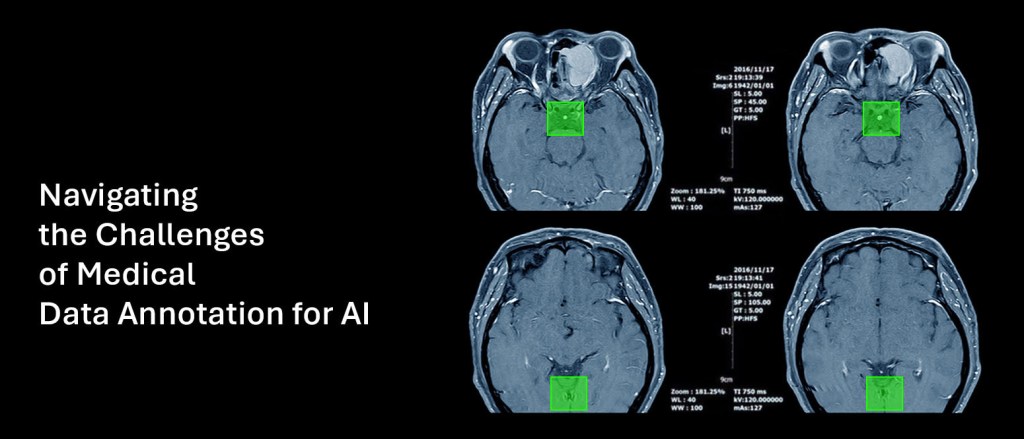
Image annotation:Adding tags to objects or people, descriptive labels, indicators for displaying location of certain elements within an image.
Entity recognition: Adding labels to words or phrases with meanings or categories like name identification.
Sentiment analysis: Adding labels to text with particular emotions or sentiments like positive, negative, or neutral.
Conversation categorization: Adding labels to text in various categories like customer service conversations, sales conversations, or general inquiries.
Metadata annotation: Adding additional information to raw data for assisting AI models to recognize and interpret patterns. This may involve adding details like timestamps, location data, or other relevant metadata which can assist AI models in better comprehending the context of the data.
Generative AI models can be trained accurately and precisely using well-annotated data resulting in enhanced performance and the capability to produce new content which meets key criteria or goals.
Three key benefits of Generative AI
1. Speed and Efficiency: Generative AI hastens the data labeling process by processing large volumes of data in one go. It aids businesses in focusing, saving time and resources by shifting their time to main activities and making optimum use of their workforce.
2. Accuracy and Consistency : Generative AI limits the occurence of error in AI models by maintaining consistency in data labeling. The models become accurate with time as they glean from the data processed by them.
3. Scalability: Generative AI makes it easy to scale with the growing amount of data. It allows for labeling and annotation efficiency by quickly adjusting the data volumes.
Challenges of Generative AI
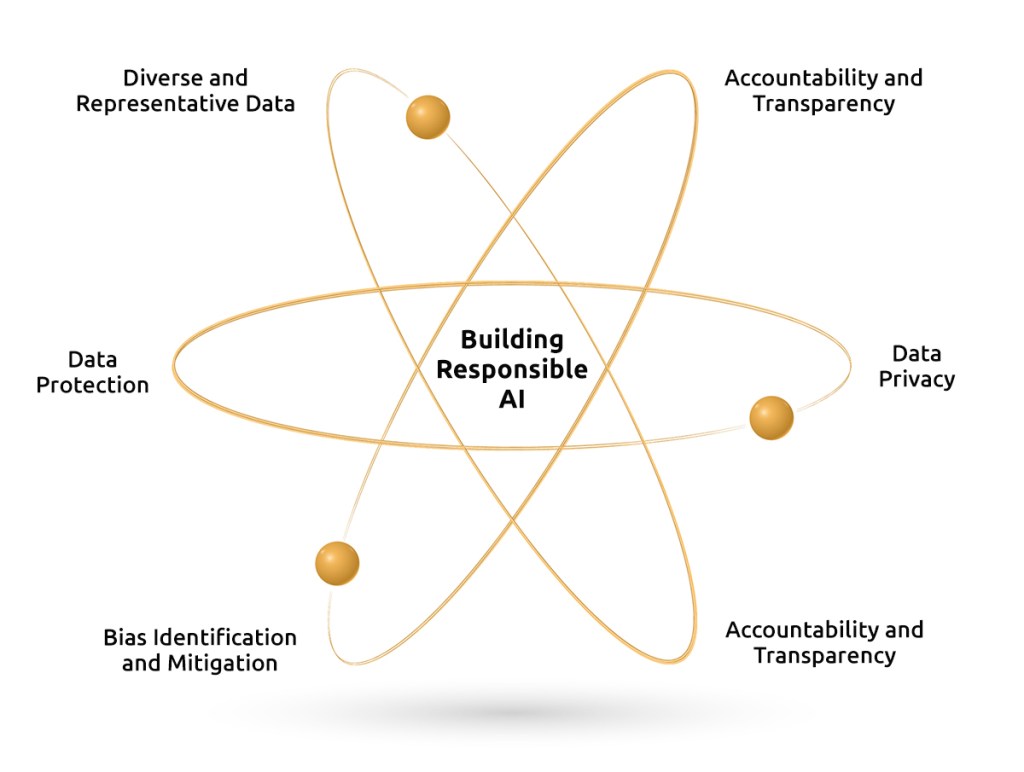
There are many risks assoicated with Generative AI. For instance, creation of deep fakes or copies for producing artefacts. Training of ChatGPT and similar tools on a vast quantities of public data which are not compliant with General Data Protection Regulation (GDPR) and other laws. The other associated risks are:
1. No transparency: Large language models like ChatGPT and other Generative AI models cannot be predicted and their makers too aren’t always aware of how they work.
2. Accuracy: These systems at times generate incorrect and fake answers. All outputs must be assessed for accuracy, appropriateness and utility prior to reliance on public dissemination of information.
3. Bias: Policies must be there to detect bias in outputs as well as to deal with them in a way that’s consistent with the company policy and other legal requirements.
4. Intellectual Property: At present, there are no verifiable data governance and protection assurance with respect to confidential enterprise information. Users must be wary of the fact that data or queries entered by them will inadvertently become public information. We also advise enterprises that they need to have controls so that their IP is not exposed.
5. Cybersecurity: Enterprises must be prepared to utilize generative AI systems for cyber and fraud attacks. They must make sure controls are put in place. They must confer with their cyber-insurance provider for verifying the extent to which their current policy covers AI-related breaches.
6. Sustainability: Generativwe AI consumes a major amount of electricity. One must select vendors that limit power consumption and use high-quality renewable energy for mitigating impact.
Summing up, AI is transforming the manner in which humans are interacting with the world. It has opened up opportunities and challenges for organizations that would like to leverage new AI technologies. These AI models bring together the capability of assimilating knowledge from several sources and utilizing it for automating tasks and enhancing human creativity.




 Data Annotation Services for Generative AI | Anolytics
Leave a comment