
The field of artificial intelligence is rapidly evolving. Just when we got used to the amazing capabilities of chatbots and large language models (LLMs), along comes a new way of thinking about AI in the form of Agentic AI. This is not just a small change in how we think about AI; this is a transformative way for AI to operate that will change the way we do everything – from how we run businesses to our own productivity. If you want to stay ahead of the curve, it is important to understand Agentic AI, and an Agentic AI Course is the next logical step.
The Evolution of AI: From Reactive to Proactive
To understand Agentic AI, let’s briefly trace the journey of AI development.
Phase 1: Rule-Based Systems (Early AI): Do you remember expert systems or simple automation scripts? These represented the early, early stages for AI–these were systems that took input, and using a predefined set of rules, performed a task. They were efficient, but inflexible and they were not built to respond to unexpected situations.
Phase 2: Machine Learning and Deep Learning (Modern AI): This era saw the rise of the way AI can take data and learn from it. From image recognition to predictive analytics, industries were transformed by machine learning. Deep learning, which is a subfield of machine learning, advanced the development of neural networks to create even more sophisticated capabilities such as natural language processing.
Phase 3: Large Language Models (LLMs) and Chatbots (Current AI Frontier): The emergence of LLMs (Large Language Models) like GPT-3, GPT-4, and others has transformed everything. The ability of these models to comprehend and generate and summarize human-like text is turning point in AI advancement. Chatbots using LLMs have brought the use of AI into the mainstream with simple implementations demonstrating their ability to assist with customer service, content creation, and analyzing sophisticated problems. They are incredibly powerful; they can answer simple questions, provide insight into business decisions, write essays and even generate code! There is one key limitation with this type of AI technology: they are generally responsive and not proactive. They respond to a prompt, but they do not typically start an action or plan and break down complex and strategic goals into executable subtasks on their own.
Phase 4: Agentic AI (The Next Leap): This is where Agentic AI comes into play. Picture an AI that not only answers your questions, but can independently work toward a broadly defined, abstract set of goals you choose. An AI that can strategize, plan, carry out, monitor this process and adjust if necessary also. That is what Agentic AI promises—an AI that is inclusive of the abstract goal—an AI that is producing actions based on the applied meaning of everything they represented in abstractions. You can see, even if the term is not the best, the leap in behaviour that takes this AI to a new space compared to its chatbot cousins. If you seriously want to develop your skills in these complex behaviours, the Agentic AI course will create the framework you need to move through this new territory.

What Exactly Is Agentic AI? Defining the Core Components
At its heart, Agentic AI refers to AI systems that are calculated to act as intelligent agents. These agents have several key physiognomies that allow them to operate with a degree of autonomy and purpose.
Goal-Oriented: Agentic AIs are different from chatbots, in that even though chatbots wait for a prompt, Agentic AIs are given an overall task (e.g. “look into the best marketing strategies for a new product,” “plan my next business trip,” “create a simple web application”) and then they work to complete that task.
Planning and Reasoning: To complete more complex goals, Agentic AI can break the initial goal down into easier sub-goals. It can develop a plan, reason through steps that may go wrong, and the overall strategy may change as new information becomes known. Multi-step reasoning is an aspect of Agentic AIs.
Tool Use: An essential aspect of Agentic AIs is the ability to interact with or affect external tools and environments. This may mean using a web browser to do research, using a public API to send an email or calendar event, a code interpreter, or even using a robotic system. This aspect drastically limits their capabilities beyond text generation.
Memory and Self-Reflection: Sometimes Agentic AIs also contain some sort of memory, retaining information based on previous observations, conversations, and past tasks. More advanced agents can even self-reflect, being able to reflect on their own behaviours and outcomes, being able to identify errors and learn from their experiences to improve their future actions. The idea of iterative learning is foundational to an Agentic AI’s performance.
Autonomy: While guided by human-defined goal line, Agentic AIs operate with a noteworthy degree of autonomy in how they accomplish those goals. They make decisions, execute plans, and troubleshoot issues without continuous human intervention.
Also read : Understanding Quality in Generative AI Training Datasets
Why Is Agentic AI the Next Leap Beyond Chatbots?
The division between chatbots and Agentic AI is crucial for empathetic the future of AI.
- From Conversation to Action: Chatbots are great at conversations and retrieving information. You ask, they respond. Agentic AI takes this one step further: you ask it to do something, it plans the steps required to achieve it.
- Complex Problem Solving: While an LLM can articulate a comprehensive overview of quantum physics, an Agentic AI would be able to approach a problem coupled with certain constraints and required to design the experiment based on preconceptions associated with quantum physics, while tapping other tools and resources.
- Increased Efficiency and Automation: Imagine, no longer simply getting answers to questions about trends in the market but actually having an AI agent work automatically to generate an entire report for you on market analysis compiling, synthesizing, and formatting various inputs from multiple sources into something presentation-ready. That is decomposition.
Personalized and Proactive Assistance: The future of personal assistants evolves from simply issuing your commands into anticipating your needs, proactively managing your calendar, and taking initiatives on your activities aligned with your preferences and work habits and goals. That is the power of Agentic AI.

Real-World Applications and the Future Impact of Agentic AI
The potential applications of Agentic AI are vast and will permeate nearly every industry.
Business Operations:
- Automated Research: An agent can find competitive intelligence, analyze market data for trends, synthesize reports, create routes for patient journeys and save hours of work for every person involved.
- Project Management: Agents could break down goals, assign tasks, track progress, and even note any delays that may be required.
- Customer Service: Aside from answering frequently asked questions, agents could proactively identify issues, getting the ticket handled end-to-end, and even follow up if needed.
Software Development:
- Code Generation and Debugging: Agents can write code, find bugs, and even provide optimization feedback, providing the ability to finish many development cycles in much shorter timeframes.
- Automated Testing: Agents can design test cases and run them, taking software quality to a whole new level.
Healthcare:
- Drug Discovery: Agents can analyze huge quantities of data to find potential drug candidates and show better pathways for the research.
- Personalized Treatment Plans: Agents could synthesize patient data, read all the new literature regarding treatment options for patients completely unrelated to their previous treatments, and come up with viable care plans that doctors could approve.
Education:
- Personalized Learning Paths: Agents could create adaptive curricula based on individual student progress and learning styles.
- Automated Tutoring: Beyond providing answers, agents could guide students through complex problems, offering hints and explanations.
The economic effect will be large when it generates new productivity and innovation. Companies adopting Agentic AI will have a meaningful competitive advantage, and individuals demonstrating these skills will be sought after. This highlights the growing importance of an Agentic AI Course for professionals.
The Challenges and Ethical Considerations
While the potential is immense, Agentic AI also presents challenges:
- Complexity and Control: Designing and managing complex agents demands a high level of technical complexity. It is important to ensure that autonomous agents are functioning under the desired parameters and are contained so that it doesn’t “go off rails.”
- Ethical Implications: When an autonomous agent falls short, who will be responsible? What considerations will we have when striving for fairness, transparency, accountability, and so on? These are the important questions we must address in relation to the timely evolution of this technology.
- Security Risks: Granting access to tools and other systems will create new security threats if we are not careful.
Job Displacement: With every major technological innovation, there will be concerns of job displacement. Yet, it is more likely that job roles will change and there will be a demand for new skills in AI development, oversight, and collaboration.

Also read – A Guide to Content Moderation: Benefits, Challenges & Best Approaches
Mastering the Future: Why an Agentic AI Course is Essential
Given the transformative power of Agentic AI, gaining the data and skills to work with it is no longer elective for those in knowledge, data science, and forward-thinking occupational roles; it’s a necessity. An Agentic AI Course provides:
- Foundational Knowledge: A comprehensive exploration of the architectures and principles that underpin Agentic AI, including multi-agent systems and other agentic frameworks.
- Practical Skills: Experience putting into practice the process of developing, deploying, and managing AI agents, including connecting agents to external tools, building memory, and creating planning algorithms.
- Understanding of LLM Integration: Explore how to effectively utilize the capabilities of Large Language Models as part of an agentic framework, using the LLM as the “brain” controlling the agent.
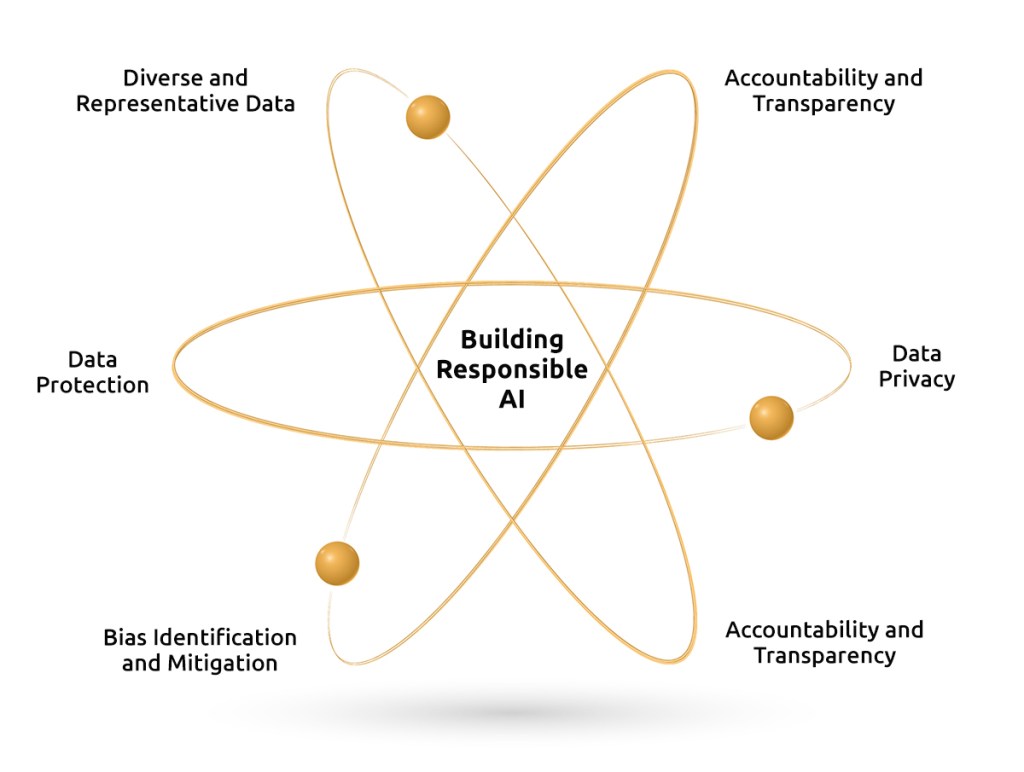
- Ethical Frameworks: An examination of ethical considerations and best practices for responsible AI development and deployment.
For organizations and professionals in Boston and elsewhere, the Boston Institute of Analytics offers the new programs that will help you grow and hone these very skills. An Agentic AI Course is not just theoretical; it’s hands-on training, aligned with industry needs that offer you enabled experiences to manage the inevitable challenges and opportunities in this next chapter of AI development. When you choose to take the Agentic AI Course at the Institute, you are not just learning about the future of AI; you are shaping your own role within it.
Final Thoughts
Anolytics AI, on the other hand, represents a tremendous capability shift for AI, taking us from reactive chatbots to proactive intelligent agents capable of seeking out their goals. Agentic AI will facilitate vastly improved automation, efficiency, and problem-solving capacities in all sectors. There will be challenges along the way but the potential for opportunity outweighs the number of challenges. If you want to maintain relevance and leadership in the advanced AI age, you must understand and master Agentic AI. Consider that an Agentic AI Course, especially one offered from reputable organizations like the Boston Institute of Analytics is an investment in future-proofing your career and leveraging an unparalleled technology. The next leap in AI is already here, and it’s called Agentic AI!




 Data Annotation Services for Generative AI | Anolytics
Leave a comment